
14 July 2026
Giloy (Tinospora cordifolia), also known as Guduchi, is one of Ayurveda’s most valued Rasayana herbs. Traditionally used to support immunity, digestion, metabolism, and overall vitality, it is regarded as a tridosha-balancing herb. This guide explores Giloy’s traditional uses, available forms, dosage, safety considerations, and current scientific understanding.

| Attribute | Details |
|---|---|
| Botanical Name | Tinospora cordifolia |
| Sanskrit Name | Guduchi, Amrita |
| Common Name | Giloy |
| Ayurvedic Classification | Rasayana |
| Traditionally Used For | Immunity, digestion, vitality, liver wellness |
| Dosha Action | Traditionally balances Vata, Pitta and Kapha |
| Available Forms | Juice, Powder, Tablets, Satva, Decoction |
TL;DR – Giloy (Guduchi) Benefits & Best Forms
- Immunity & Longevity: Giloy is a rasayana (“nectar of immortality”) that strengthens immunity, detoxifies, and supports long-term vitality.
- Fever & Recovery: Traditionally used for chronic and seasonal fevers, dengue, and post-illness recovery.
- Digestive & Metabolic Support: Improves digestion, balances blood sugar, and promotes liver & kidney health.
- Maharishi Ayurveda Products: Giloy Ghan Vati (easy daily tablets for immunity & fever), Giloy Satva (purified starch for digestion & urinary comfort), and Amritarisht (fermented tonic for chronic fevers & resilience).
- Safe & Tridosha-Balancing: Giloy calms Vata, Pitta & Kapha, making it suitable for most body types when used in the right form and dosage.
What Is Giloy (Guduchi)?
The Sanskrit phrase ‘Gudti rakshati iti guduchi’ or ‘that which protects the body from disease’ is how the herb Giloy is described in ancient Indian texts. In Ayurveda, the herb is referred to as amrita or ‘nectar of immortality’ and used extensively by Ayurvedic practitioners. Giloy’s botanical name, Tinospora cordifolia was given by latter-day European botanists. Even in India, the herb goes by various names: Giloy in Telugu is Tippa Teega or Amruthavalli, in Punjabi it is known as Gilo or Gilow, whereas Giloy in English is known as the Heart-leaved Moonseed or Guduchi.
Ayurvedic attributes. Vaidyas categorise giloy as a rasayana (rejuvenative herb) to protect the body and the mind. It is medhya (or brain tonic), balya (strength-giving), deepan (stimulates the capacity of digestion), and pittasarak (wiping out excess heat). Giloy nurtures plasma and blood tissues and functions through channels (srotas) to nourish all seven tissues. The flavour of it is tikta (bitter) and kashaya (astringent), and its properties are laghu (light) and somewhat snigdha (unctuous). The properties allow it to calm all three doshas-Vata, Pitta and Kapha.
Why Is Giloy Known as “Amrita” in Ayurveda?
Amrita means “nectar of immortality.” Giloy earned this name because it helps rejuvenate tissues, boost immunity, and support longevity. Mythological stories recount that the Gods used giloy to revive warriors during battle. Its combination of tastes, qualities, and warm potency allows it to balance Vata (movement), Pitta (heat) and Kapha (structure), making it uniquely tridosha‑pacifying.
What Active Compounds Are Found in Giloy?
Giloy contains many bioactive molecules: alkaloids such as berberine and magnoflorine, glycosides, diterpenoid lactones, steroids, flavonoids and polysaccharides. These compounds have antioxidant, anti‑inflammatory and immunomodulatory effects. Medicinenet summarises its main groups as terpenoids, alkaloids, lignans (plant polysaccharides) and steroids.
How Does Giloy Support Immunity?
Giloy supports the body’s natural defence mechanisms and helps it adapt to seasonal changes. Its antioxidant properties may also help protect cells from oxidative stress while supporting liver and kidney health.
Can Giloy Help During Fever and Infections?
Traditional Ayurvedic texts describe Giloy as useful for supporting the body during chronic and intermittent fevers. It may also support recovery and immune function during infections. However, dengue, malaria, persistent fever, or low platelet counts require immediate medical diagnosis and treatment.
How Does Giloy Support Detoxification and Liver Health?
Giloy traditionally supports blood purification, healthy bile flow, and normal liver function. It may also assist kidney function and the body’s natural processes for eliminating metabolic waste.
Can Giloy Support Joint and Bone Health?
Giloy’s anti-inflammatory properties may help reduce occasional joint discomfort and stiffness. It may also support healthy uric acid metabolism and the body’s natural recovery processes.
How Does Giloy Benefit the Skin, Hair, and Hormonal Balance?
According to Ayurveda, Giloy helps balance excess Pitta and clear accumulated heat from the blood. This may support clearer skin, healthier hair, and overall hormonal balance.
Can Giloy Improve Mental Clarity, Energy, and Vitality?
Giloy is regarded as a Medhya Rasayana in Ayurveda, meaning it supports the nervous system, memory, concentration, and cognitive function. By strengthening ojas, or vital essence, it may also help the body cope with stress, fatigue, and reduced stamina.
Can Giloy Help Maintain Healthy Blood Sugar Levels?
Giloy has deepana-pachana properties, which means it supports digestion and metabolic function. It may help regulate glucose metabolism and support insulin function. People with diabetes or those taking blood-sugar-lowering medication should consult a healthcare professional before using Giloy.
How Does Giloy Support Digestion?
Giloy supports healthy bile secretion and digestive metabolism. It may help relieve occasional indigestion, mild abdominal discomfort, and sluggish digestion by strengthening agni, or digestive fire.
Can Giloy Support Liver Function During Jaundice?
Ayurvedic tradition describes Giloy as a Pittasarak herb that supports bile flow and blood purification. Giloy leaf preparations have traditionally been consumed with buttermilk for liver-related imbalances. However, jaundice can indicate a serious underlying condition and requires prompt medical evaluation.
Giloy Forms & How to Use Them
Form | Description & Use | Typical Dosage |
Decoction (Kwath) | Boil fresh or dried stems to prepare a bitter tea. Traditionally taken on an empty stomach for immunity and fever. | 40–80 ml daily |
Concentrated tablet made from extract. Convenient for fever, immunity and general tonic. Maharishi Ayurveda’s Giloy Ghan Vati provides organic extract with no additives. | Usually 1–2 tablets twice daily after meals (follow product label). | |
Guduchi Churna (Powder) | Dried and powdered stem; used to make decoctions or mixed with honey. | 2–6 g daily |
Giloy Juice (Swarasa) | Fresh juice extracted from the stem; potent but bitter. | 2–3 teaspoons daily. |
Purified starch collected from soaked stems. Effective for digestive disorders, bleeding conditions and urinary discomfort. | 0.5–2 g daily under supervision. | |
Fermented decoction combining giloy with other herbs; used for chronic fevers and low immunity. | Taken with equal water after meals, unless it causes acidity. |
Maharishi Ayurveda Giloy(guduchi) Products
Giloy Ghan Vati
Maharishi Ayurveda’s Giloy Ghan Vati is a concentrated tablet made from pure organic Giloy extract with no additives. It is one of the most convenient ways to take Giloy daily—ideal for immunity support, fever management, and as a general tonic. The usual dosage is 1–2 tablets twice a day after meals, or as directed on the product label.
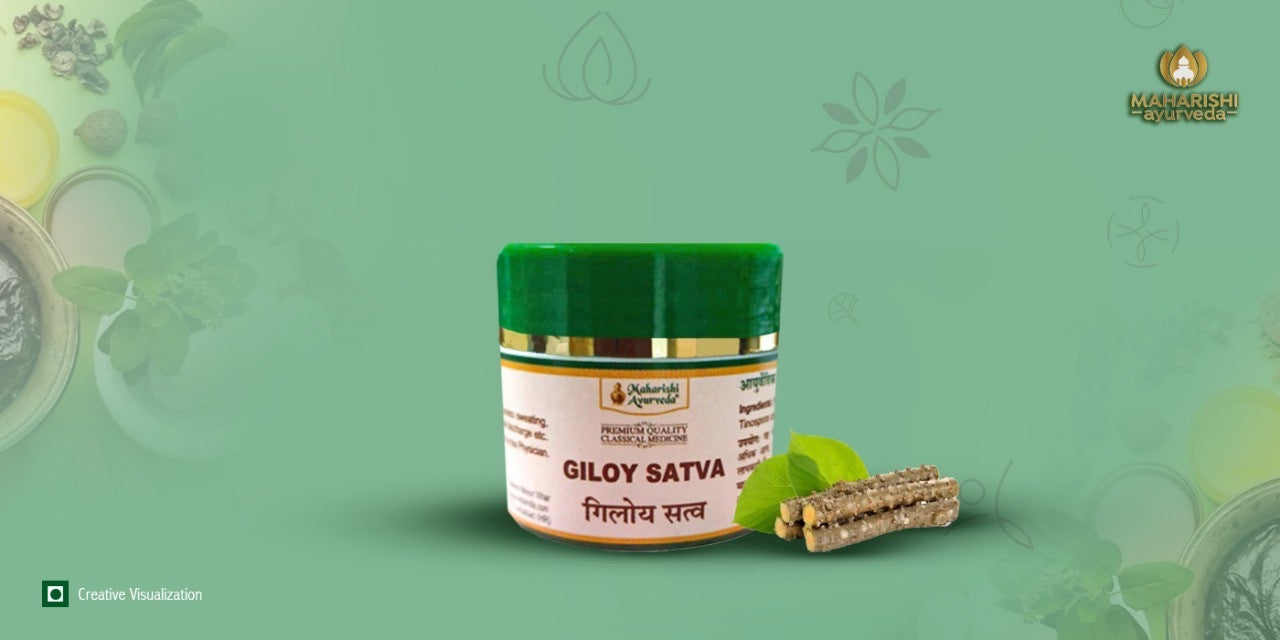
Giloy Satva
Giloy Satva from Maharishi Ayurveda is the purified starch collected after soaking Giloy stems. This unique preparation is traditionally valued for its effectiveness in digestive discomfort, bleeding conditions, and urinary disorders. Since it is more potent and condition-specific, it is usually taken in small amounts—about 0.5–2 g daily under Ayurvedic supervision.
Guduchi satva– also known as giloy satva which is very effective from digestive ailments to bleeding conditions like bleeding piles to menorrhagia , it is highly effective in management of fever , also known as ‘Indian Quinine’ (Bhavaprakash Nighantu)
Method of Preparation:
- Collect thick Guduchi stems.
- Remove the bark from the stems and soak them in water at a ratio of 1:4 (one part Guduchi to four parts water) for 12 to 24 hours.
- After soaking, rub the stems thoroughly to release their essence.
- Strain the mixture to separate the water from the plant material.
- Allow the strained liquid to sit until the powder settles at the bottom. Finally, pour off the water. This resulting product is known as Guduchi Satva.
Best Time for Collection: Guduchi should be collected before the rainy season to ensure optimal quality.
Amritarisht
Maharishi Ayurveda’s Amritarisht is a classical fermented decoction where Giloy is blended with other immunity-boosting herbs. It is especially beneficial in chronic fevers, post-illness recovery, and improving resilience. Typically, it is taken with an equal quantity of water after meals, though those with sensitive digestion should use it cautiously if prone to acidity.
*Dosage note: Always consult an Ayurvedic practitioner before starting any herb, particularly if pregnant, breastfeeding or taking medicines.
Modern Scientific Perspectives of Giloy

Modern research has begun to validate Giloy’s traditional uses, identifying bioactive compounds like alkaloids (e.g., Berberine), terpenoids, steroids, flavonoids, and glycosides. These contribute to its pharmacological properties:
- Anti-inflammatory: Giloy reduces inflammation by inhibiting enzymes like COX-1 and COX-2, as shown in studies on its leaf extracts (ScienceDirect, 2025).
- Antioxidant: Its high antioxidant content protects cells from oxidative stress, supporting overall health (PMC, 2024).
- Anti-diabetic: Research indicates Giloy improves insulin sensitivity and reduces blood glucose levels, beneficial for type 2 diabetes (Journal of Ayurveda and Integrative Medicine).
- Immunomodulatory: Giloy enhances immune function by modulating cytokine production and activating immune cells, making it a potent immunity booster (ScienceDirect, 2025).
- Anti-cancer: Preliminary studies suggest Giloy induces apoptosis in cancer cells, particularly in breast and oral cancers (PMC, 2023).
- Antiviral: In vitro studies show potential against viruses like HIV by inhibiting key viral enzymes (BMC Infectious Diseases, 2012).
These findings align with Ayurveda’s holistic view of Giloy as a rejuvenator and protector, though more clinical trials are needed to confirm its efficacy in humans.
Role in Specific Diseases
Dengue
Dengue fever, caused by the dengue virus, can lead to high fever, joint pain, and low platelet counts. Giloy is traditionally used to manage dengue due to its fever-reducing and potential platelet-enhancing effects.
- Research Insights: A 2024 study in ScienceDirect titled “Anti-dengue therapeutic potential of Tinospora cordifolia” found that Giloy, particularly its compound Berberine, suppresses the cytokine storm and inhibits viral proteins, reducing dengue severity. Another study on ResearchGate (2024) explored Guduchi Kwath in dengue patients with thrombocytopenia, suggesting improved platelet counts (ScienceDirect, 2024; ResearchGate, 2024).
Immunity Booster
Giloy’s role as an immunity booster is well-documented in both Ayurveda and modern science.
- Research Insights: A 2025 ScienceDirect review on “Immunomodulatory properties of Giloy leaves” highlighted its ability to modulate NF-kB pathways and interleukin production, enhancing immune responses. It also induces apoptosis in immune cells, strengthening the body’s defenses (ScienceDirect, 2025).
- Traditional Use: Giloy is consumed as a decoction or powder to bolster immunity, especially during infections or recovery.
Dosage, Best Time & Safety
When to take: Giloy decoction is traditionally consumed on an empty stomach as a rejuvenative. Tablets and churna may be taken after meals. Giloy satva is used as an adjuvant with honey or buttermilk.
Suitable for long‑term use? Ayurveda regards giloy as a safe rasayana, but moderate doses are advised. Modern sources report that typical supplements provide 400–1000 mg daily. Over‑consumption may cause nausea, diarrhoea or headache.
Who should avoid: People with autoimmune diseases or those on immunosuppressant drugs should be cautious because giloy stimulates the immune system. Pregnant or breastfeeding women should take giloy only under supervision.
Dosha Balancing & Rasayana Therapy
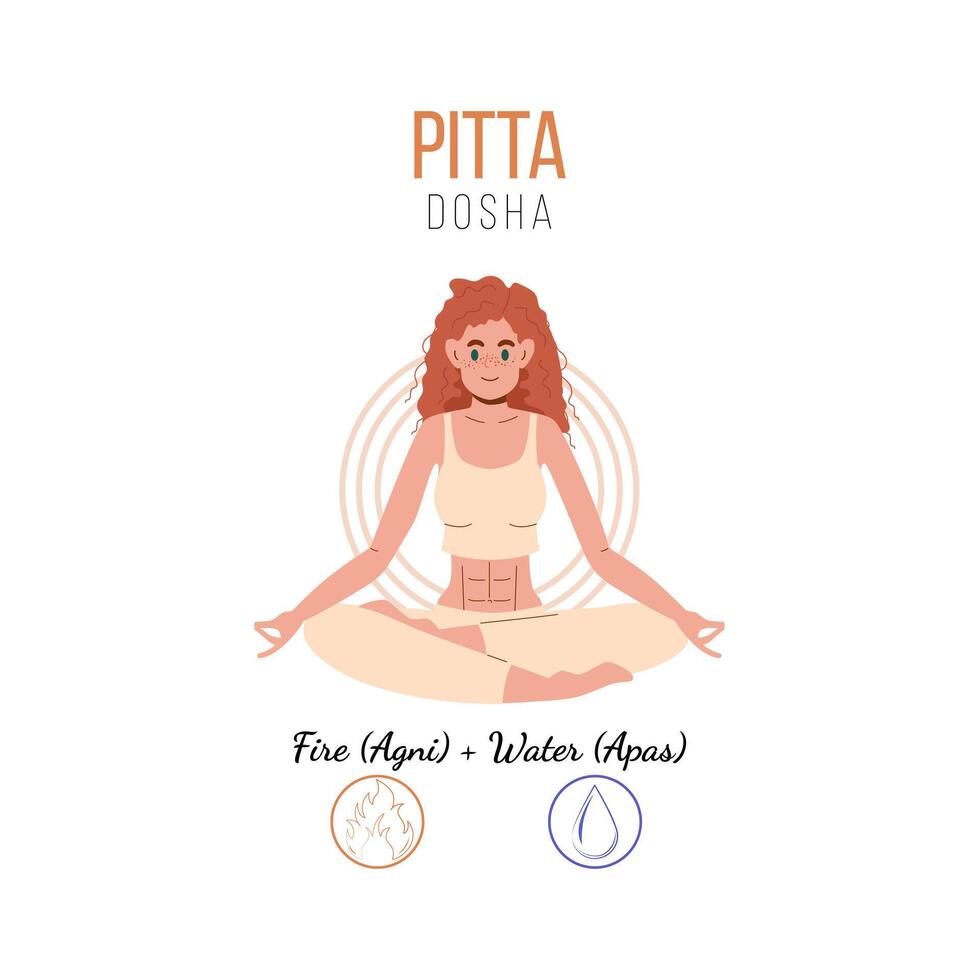
Giloy has unique tridosha-hara properties which enable it to balance the Vata, Pitta and Kapha. It is warming in nature but is slightly oily, so it reduces Vata and Kapha, while its bitter and astringent scales impart a cooling effect on Pitta. Hence, it suits almost every constitution. Understanding your prakriti, or body type, is very important in Ayurveda. You must take a dosha test to find out if you are predominantly Vata (light, dry, variable), Pitta (hot, intense), or Kapha (heavy, stable). Giloy generally supports all types:
- Vata: Giloy, with its warmth and unctuous nature, supports the lighter qualities of air in Vata. It also helps in removing toxins from the body that accumulate due to weak digestion.
- Pitta: It cools and dries, counterbalancing the excess heat of Pitta, thus suitable for conditions like skin disorders, acidity, and excessive menstrual bleeding.
- Kapha: The lightness and bitterness of Giloy cancel out the heavy and phlegmatic nature of Kapha, thus supporting metabolism and immunity.
Dosha-balancing actions make giloy a rasayana that nourishes the tissues, builds up ojas and enhances longevity. It forms part of the detox treatments under Panchakarma. Vaidyas also combine it with amla or tulsi to potentiate its actions.
Check out Maharishi Ayurveda collections for Vata, Pitta and Kapha.
Conclusion
Giloy (Guduchi) is one of the most versatile herbs in Ayurveda, heralding a history of being known as the herb for longevity. Modern research also supports its myriad traditional uses against immunity, detoxification, control of blood sugar, joint health, and mental clarity(2). Hence, before using this herb, one must be very selective: choose the right kind of preparation based on your individual needs, follow the stipulated dos,e and take advice from an experienced practitioner in case of any underlying conditions or if one is pregnant. For best results, choose a trusted preparation like Maharishi Ayurveda’s Giloy Ghan Vati made from pure, organic giloy extract with no additives. Its concentrated form makes it easy to take daily for immunity, detox, and vitality.
If you have further concerns or specific health conditions, it’s best to seek expert guidance. Consult our Vaidya for a personalized Ayurvedic recommendation tailored to your needs.
References
Bhavamishra. Bhavaprakasha Nighantu. 16th Century Ayurvedic Materia Medica.
Doonited Affiliated: Syndicate News Hunt
This report has been published as part of an auto-generated syndicated wire feed. Except for the headline, the content has not been modified or edited by Doonited