
13 July 2026
Bhumi Amla (Phyllanthus niruri), also known as Bhumyamalaki, is an Ayurvedic herb traditionally valued for supporting liver health, digestion, urinary wellness, and natural detoxification. Ayurveda classifies it as a cooling herb commonly used in Pitta-related conditions. This guide explains Bhumi Amla’s traditional uses, dosage, safety considerations, and current scientific understanding.

Bhumi Amla at a Glance
| Attribute | Details |
|---|---|
| Botanical Name | Phyllanthus niruri |
| Sanskrit Name | Bhumyamalaki |
| Common Name | Bhumi Amla |
| Ayurvedic Nature | Cooling |
| Traditionally Used For | Liver wellness, digestion, urinary support |
| Key Compounds | Phyllanthin, flavonoids, lignans |
| Available Forms | Juice, Powder, Capsules, Tablets |
TL;DR – Bhumi Amla for Liver, Digestion & Immunity
- Liver Protector: Traditionally used in Ayurveda for hepatitis, jaundice, and fatty liver—thanks to its hepatoprotective compounds like phyllanthin.
- Digestive Strengthener: Acts as deepana and pachana—boosting appetite, relieving acidity, and regulating digestion.
- Immunity & Infections: Helps fight viral and microbial infections, including hepatitis B and respiratory conditions.
- Detox & Skin Health: Cleanses blood, supports urinary detox, and improves skin conditions like eczema and ulcers.
- How to Use: Commonly consumed as juice, powder, or capsules—choose the form that fits your routine and health needs.
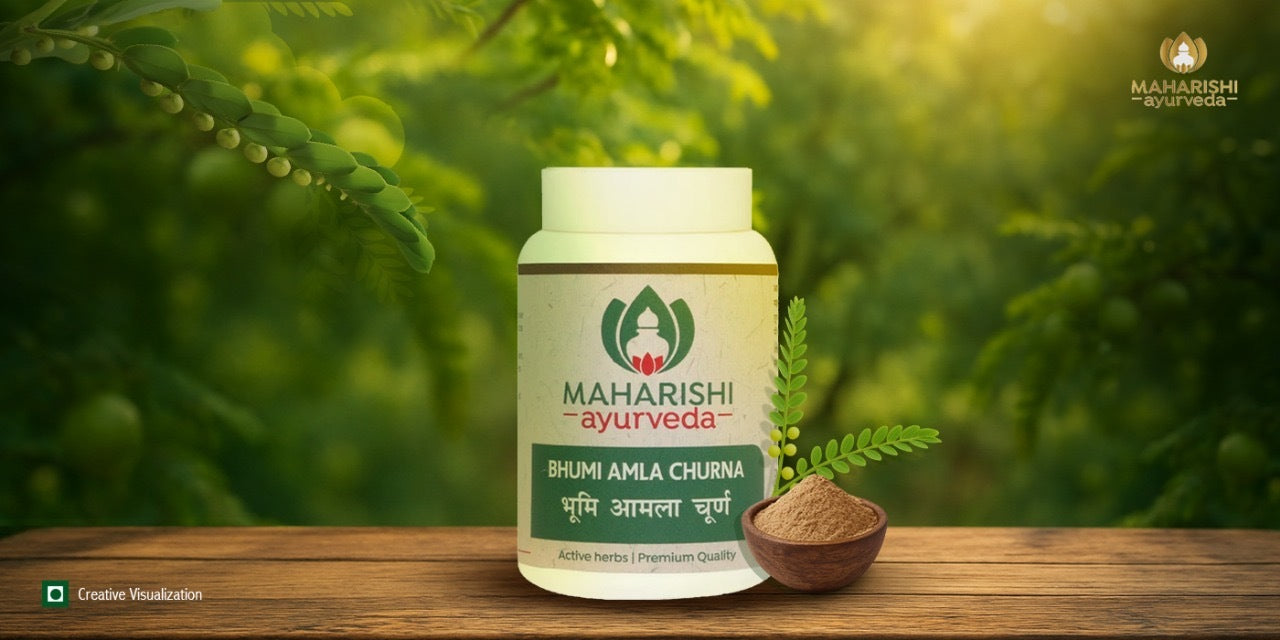
Bhumi Amla Churna: Ayurvedic Support for Liver Health
A powerful herbal formula to detoxify and support liver function, ideal for liver disorders.
What is Bhumi Amla?
Bhumi Amla is a small medicinal herb used in Ayurveda primarily to support liver health, digestion, urinary function, and the body’s natural cleansing processes. Also known as “ground amla,” it belongs to the Phyllanthus family and grows close to the ground in tropical regions, particularly during the monsoon season.
Ayurvedic practitioners have traditionally used Bhumi Amla for concerns associated with excess Pitta, sluggish digestion, liver imbalance, and urinary discomfort. The herb contains naturally occurring plant compounds with antioxidant, anti-inflammatory, and liver-protective properties.
It is familiar by various local names in India:
Tamil: Keezhanelli
Telugu: Nela Us
Hindi: Bhumi A
Kannada: Bhumi Nelli
Its synonyms are Bhumyamalaki, Bhudhatri, Tamalaki, Bahupatra, and Bahuphala, which all indicate its various
What Are the Ayurvedic Properties of Bhumi Amla?
In classical texts, Bhumi Amla is revered as Bhumyamalaki. It is classified as an herb that pacifies Pitta and Kapha doshas, while potentially aggravating Vata if used in excess due to its cooling and drying properties. Its traditional use spans liver rejuvenation, digestive strengthening, and cleansing therapies, earning it names like Tali for waste removal and Sookshmapatri, referring to its delicate, small leaves.
Bhumi Amla Plant Overview
It is a perennial herb, attaining a height of 18–24 cm, with tiny leaflets lining slender stems. Its small fruits are similar to tiny amlas, receiving the name “ground amla”.
Where It Is Found in India
It grows well in Central and Southern India, and does well in dark, wet places, particularly during the rainy months. You are likely to find it plentifully in paddies, forest margins, and trails after the summer showers.
How to Identify the Plant
Look for a short herb with small leaves arranged neatly along thin stems, bearing tiny greenish fruits underneath the leaves. Its fruits are the easiest identifier as they resemble Amla but grow directly under the leaf stalks.
Is Bhumi Amla the Same as Amla?

While often confused with the amla tree (Emblica officinalis) due to similar fruit appearance, Bhumi Amla is a small herb, whereas Amla is a large tree with bigger edible fruits. Bhumi Amla remains ground-dwelling and delicate, whereas Amla bears its fruits on branches.
| Bhumi Amla | Amla |
|---|---|
| Phyllanthus niruri | Phyllanthus emblica |
| Small herb | Tree fruit |
| Traditionally associated with liver and urinary wellness | Traditionally associated with Rasayana and Vitamin C |
| Grows close to the ground | Gooseberry tree |
What Nutrients and Active Compounds Are Found in Bhumi Amla?
Bhumi Amla is rich in bitter (Tikta), astringent (Kashaya), and sweet (Madhura) tastes, and is light (Laghu) and dry (Ruksha) in quality with cold potency (Sheeta). Its actions span hepatoprotective, antioxidant, digestive stimulant, diuretic, and anti-inflammatory effects, supporting plasma, blood, fat, and female reproductive tissues.
Top Health Benefits of Bhumi Amla

1.How Does Bhumi Amla Support Liver Health and Detoxification?
The foremost benefit of Bhumi Amla lies in its ability to protect and rejuvenate the liver. It is traditionally used in jaundice, hepatitis B, fatty liver, and hepatosplenomegaly. Its hepatoprotective and bile-enhancing properties aid in detoxifying liver toxins, as supported by modern studies highlighting the presence of phyllanthin and hypophyllanthin as protective compounds.
Check Now: 10 Silent Signs Your Liver Might Be in Trouble—>
2.Can Bhumi Amla Improve Digestion and Appetite?
It serves as a deepana (appetiser), pachana (digestive), and anulomana (carminative) drug. It increases the digestive fire, alleviates hyperacidity, dyspepsia, diarrhoea, and dysentery, and regulates
3.Does Bhumi Amla Help Regulate Blood Sugar Levels?
Its hypoglycaemic and diuretic properties make it supportive in blood sugar regulation, beneficial for individuals managing diabetes alongside their practitioner’s guidance.
4.How Does Bhumi Amla Support Immunity and Reduce Inflammation?
Due to its antioxidant and cooling nature, Bhumi Amla decreases the inflammation for conditions like arthritis or fractures, whereas it increases the immune response when fighting infections.
5.Is Bhumi Amla Beneficial for Skin Health?
By cleansing the Blood and Lowering Toxicity, it Treats Skin Disorders such as Eczema, Dermatitis, Ulcers, and Wounds, Imparting Better-looking and Healthier-Feeling Skin.
6.Can Bhumi Amla Support Urinary Tract and Kidney Health?
Also referred to as a stonebreaker herb, it helps break down tiny kidney stones, inhibits their formation, and promotes general urine health because of its diuretic properties.
7.Does Bhumi Amla Have Antiviral and Antimicrobial Properties?
It has been demonstrated to exhibit activity against hepatitis B, enteroviruses, and urinary/respiratory pathogens, thus substantiating the use as revealed by ethnomedical studies for the treatment of viral/microbial infections.
8.How Does Bhumi Amla Support Respiratory Health?
It is Kasahara (anti-cough) and Shwashara (beneficial for breathing issues), making it effective in managing coughs, chronic fevers, and respiratory infections.
How to UseBhumi Amla?
Traditional Practice in Ayurveda
It comes in use, internally, in powders, juices, decoctions, and infusions, for liver, digestive, urinary, and gynaecological disorders. Externally, the paste of the drug is applied over wounds, inflammation, fractures, and diseases of the skin.
Available Forms
- Powder (Churna): 3–6 gms daily with water, honey, or rice water.
- Juice (Swarasa): 10–20 ml fresh juice once or twice a day.
- Decoction (Kashayam): 10–20 ml boiled whole plant decoction.
- Tablets/Syrup: Can be found at Ayurvedic stores for easy use.
How to Make Bhumi Amla Juice at Home
- Rinse the fresh Bhumi Amla leaves thoroughly.
- Crush and blend with a bit of water.
- Strain to get 10–20 ml of green juice.
- Take once or twice daily, ideally on an empty stomach, for liver and urine health.
How to Use Bhumi Amla for Fatty Liver?
In fatty liver, Bhumi Amla powder (3–6 gms) or fresh juice (10–20 ml) may be taken two times daily. Decoction (10–20 ml) is also helpful for purification. Always consult an Ayurvedic practitioner for the correct dosage.
Bhumi Amla Churna: Ayurvedic Support for Liver Health
A powerful herbal formula to detoxify and support liver function, ideal for liver disorders.
When and How to Take Bhumi Amla?
Morning consumption aids in detoxification and digestion, while evening use supports liver purification at night. Modify with the help of a professional.
Bhumi Amla Dosage Guidelines
Powder: 3–6 gms daily
Juice: 10–20 ml daily
Lower dosage as advised by an Ayurvedic doctor
Morning vs Night Usage
Morning intake enhances digestion and detox, while night intake supports liver rejuvenation. Select timing based on health goals and practitioner advice.
Ayurvedic Professional Advice
Always seek expert advice before starting treatment for chronic diseases, during pregnancy, or when taking other medications to prevent herb-drug interactions.
How Long Does Bhumi Amla Work ?
Results depend upon the severity of the condition. Digestive and liver benefits are commonly evident 1–3 weeks after regular use with an appropriate diet and lifestyle.
Side Effects & Safety Precautions
- Who Should Avoid Bhumi Amla:
- People with aggravated Vata
- Pregnant or breastfeeding women (only under medical supervision)
Drug Interactions
May interact with diabetes medications, diuretics. Consult a Vaidya before taking together.
Use During Pregnancy or Breastfeeding?
Approved only under the practitioner’s direction because of its strong ability to detoxify.
Long-Term Use Consideration?
Avoid excessive dosage to avert possible Vata imbalance or gastrointestinal distress. Consume sustainably according to expert counsel.
Conclusion
Bhumi Amla stands as an ancient herb offering liver protection, digestive strengthening, blood sugar regulation, immune boosting, and skin purification in one humble plant. If you seek natural solutions for liver detox or digestive enhancement, Bhumi Amla is worth considering. When selecting Bhumi Amla, it is essential to choose a formulation that retains its purity and traditional potency. Maharishi Ayurveda’s Bhumi Amla product is prepared with this classical wisdom, ensuring that each serving delivers the authentic benefits described in Ayurveda texts. Whether you choose its powder, tablet, or syrup form, incorporating Maharishi Ayurveda Bhumi Amla mindfully under practitioner guidance could be your step towards holistic health and balanced living.
Embrace Holistic Healing – Shop Bhumi Amla Churna Now!
Vaidya Consultation: Personalized Ayurvedic Guidance
Book a consultation with our Vaidya for holistic health advice tailored to your dosha.

Doonited Affiliated: Syndicate News Hunt
This report has been published as part of an auto-generated syndicated wire feed. Except for the headline, the content has not been modified or edited by Doonited