
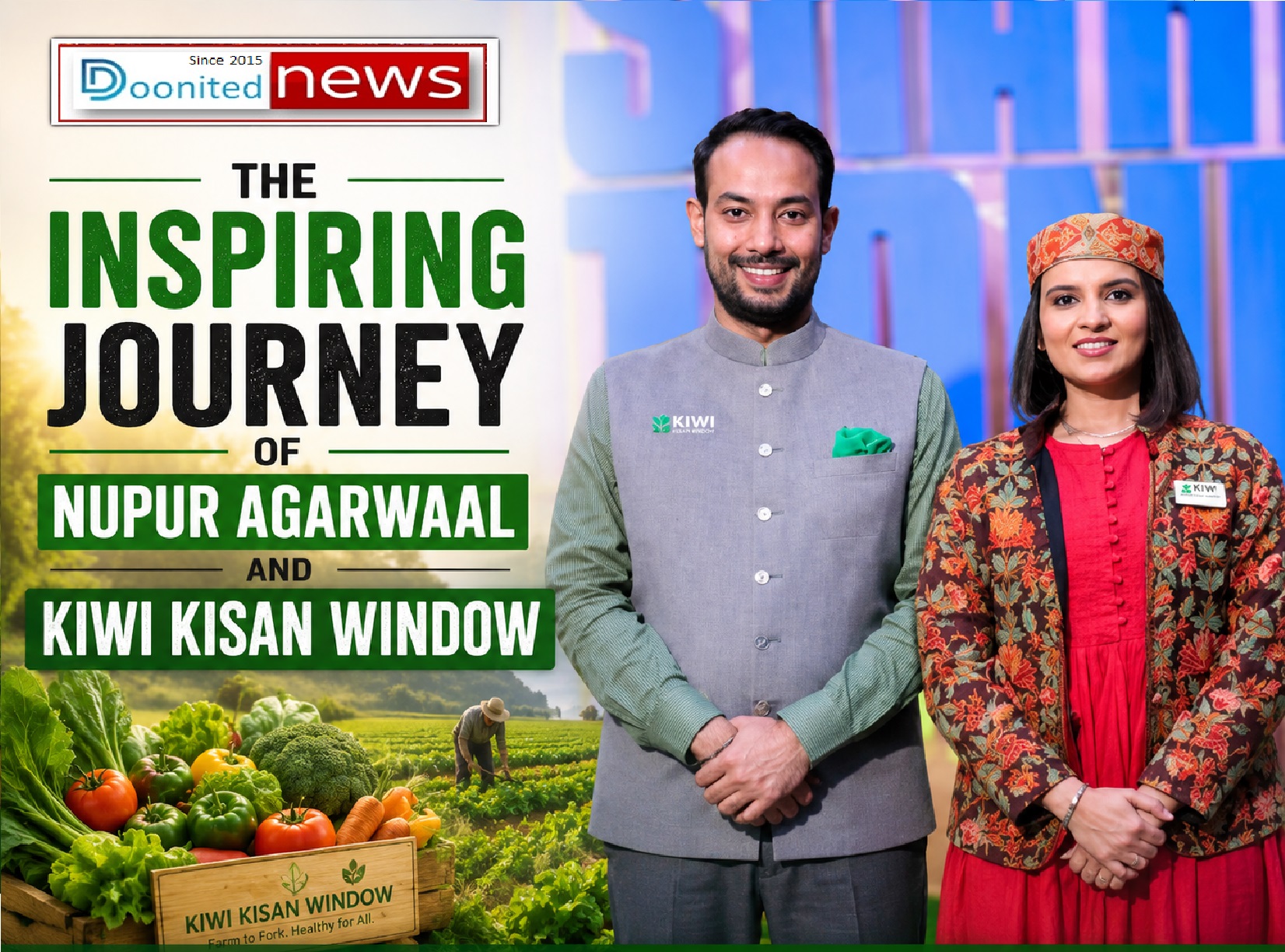
From running a Drum Circle in Dehradun to an International Businesswoman: The Inspiring Journey of Nupur Agarwaal and Kiwi Kisan Window
Doonited News | Uttarakhand | Editorial Success Story
Every successful entrepreneur has a beginning, but some beginnings are so unexpected that they sound almost poetic. For Nupur Agarwaal, the journey did began in Dehradun, in the rhythm of a drum circle.
In an age when many young Indians are leaving agriculture behind, one husband-and-wife team chose to walk in the opposite direction. They did not inherit a large agribusiness empire. They built a vision. They believed that farming could be ethical, profitable and deeply connected to the health of consumers. That vision became Kiwi Kisan Window, a farm-to-fork organic retail brand founded by Abhinav Ahluwalia and Nupur Agarwaal.
Today, their story is more than a business success. It is an editorial reminder that India’s agricultural future may depend not only on technology and policy, but also on entrepreneurs willing to restore trust between the farmer and the consumer.
Today, Nupur is known internationally as the co-founder of Kiwi Kisan Window, a farm-to-fork organic retail brand that connects farmers directly with consumers. Yet the story of how a young woman from Dehradun evolved from a community drum circle participant into an international businesswoman is not merely a business story—it is a story of courage, reinvention and purpose.
The Rhythm That Changed a Life

Years ago, Nupur was drawn to the vibrant cultural circles of Dehradun. Drum circles were spaces of creativity, connection and collective energy. People from different backgrounds gathered not to compete, but to listen, respond and create harmony together.
Friends who knew her then remember her as curious, energetic and deeply interested in people. The drum circle taught her something that no management textbook could teach: leadership is about listening before directing.
That lesson would later shape the culture of her business.
From Creativity to Conscious Living

As she became more engaged with wellness, sustainability and mindful living, Nupur began asking difficult questions about food: Where does it come from? Who grows it? What chemicals enter our kitchens unnoticed? Why are farmers struggling while consumers pay premium prices?
What started as personal curiosity gradually became a mission. She realized that food was not just a product; it was a relationship between soil, farmer and family.
Meeting the Vision That Became Kiwi Kisan Window

That mission found a powerful partner in Abhinav Ahluwalia, who went on to become the CEO of Kiwi Kisan Window. Together they shared a bold idea: build a transparent farm-to-fork ecosystem where farmers receive fair value and consumers receive authentic organic food.
It was an ambitious dream. They were not entering a glamorous industry. Organic agriculture demanded patience, credibility and relentless fieldwork.
The Difficult Early Years

The early years were defined less by success and more by persistence. They traveled to farms, spoke with cultivators, experimented with sourcing models and educated customers who were often skeptical of organic claims.
There were days when logistics failed, harvests fluctuated and financial pressure mounted. Yet Nupur refused to treat the venture as a temporary experiment. She believed that trust, once earned honestly, becomes a company’s strongest asset.
That belief kept the enterprise moving forward when easier paths were available.
A Woman Entrepreneur in a Traditionally Male Sector
Her journey challenges a persistent stereotype: that women participate in agriculture only at the level of labor. She demonstrated that women can lead agricultural enterprises, shape market strategy and build scalable sustainable brands.

When Dehradun Reached the World
The transformation was remarkable: from the intimate circle of drums in Dehradun to international conversations about organic food systems and sustainable business.
What the Drum Circle Still Teaches Her
Ask successful entrepreneurs about their greatest management lessons and many speak of mentors, books or investors. Nupur often returns to the values she absorbed in those early creative spaces: collaboration, respect for every participant and the understanding that a group produces its best rhythm when everyone is heard.
Those principles remain visible in the way Kiwi Kisan Window works with farmers, teams and customers. The business was built not on extraction, but on relationship.
Building More Than a Brand

Kiwi Kisan Window is often described as an organic retail brand, but its larger significance lies in the ecosystem it seeks to create. By encouraging cleaner farming practices, supporting growers and promoting healthier food choices, the enterprise contributes to a broader conversation about public health and rural livelihoods.
For Uttarakhand, where migration and declining farm incomes remain major concerns, such ventures offer an alternative development narrative rooted in local resources and value addition.
A Message to Young Women

Nupur’s story carries a powerful message for young women across Uttarakhand and India: your starting point does not determine your destination. A creative hobby can become a leadership school. A personal concern can become a business idea. A local initiative can become a global enterprise.
You do not need permission to begin; you need conviction to continue.

In a time when success is often measured only by valuation, visibility and speed, the journey of Nupur Agarwaal offers a different definition. Her success is rooted in authenticity. She did not abandon her values to build a business; she built a business around her values.
From a drum circle in Dehradun to an international entrepreneurial platform, her journey proves that the most powerful enterprises are sometimes born not from ambition alone, but from a deep desire to create harmony—between people, food, farmers and the future.
The rhythm that began in Dehradun did not stop with music. It became the heartbeat of Kiwi Kisan Window and the story of a woman who carried the spirit of the mountains onto the global stage.
A Partnership Rooted in Purpose
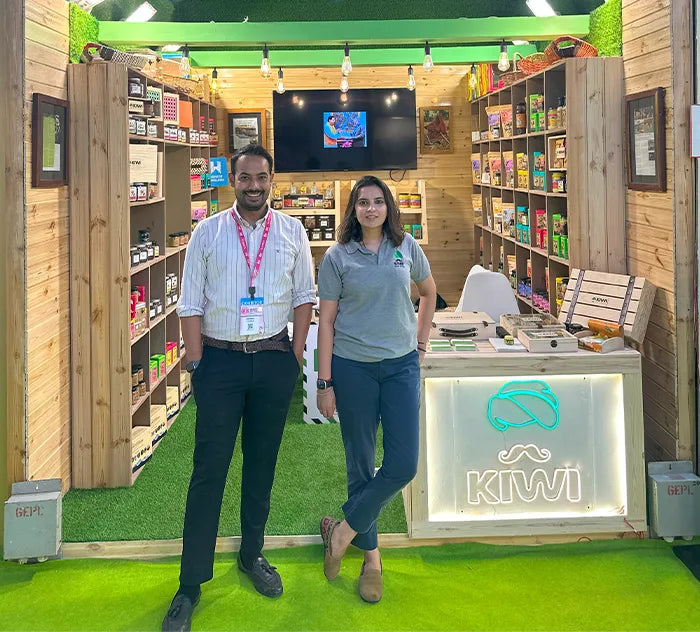
Abhinav Ahluwalia serves as the CEO of Kiwi Kisan Window, while Nupur Agarwaal is the co-founder. Together they transformed a shared concern about food quality into a working enterprise. Their idea was simple yet ambitious: create a direct relationship between farms and households so that consumers know where their food comes from and farmers receive fair value for what they grow.
In a market crowded with labels and marketing claims, they focused on transparency, traceability and genuine organic practices.
Why This Story Matters
India talks endlessly about food security, yet consumers increasingly worry about pesticides, adulteration and declining nutritional quality. Farmers, meanwhile, often struggle with volatile prices and long supply chains that reduce their earnings.
Kiwi Kisan Window attempted to address both anxieties at once. By shortening the distance between producer and consumer, the company sought to build a food system based on accountability rather than anonymity.
From Idea to Enterprise
Every farm-to-fork venture begins with a romantic idea and quickly encounters harsh realities: inconsistent harvests, logistics challenges, customer education, certification processes and the financial strain of building trust before profits appear.
According to the founders’ journey, the early years demanded persistence. They had to convince farmers that organic cultivation could be commercially viable and persuade urban consumers that authentic organic food is not just a luxury product but an investment in health.
That dual trust-building exercise became the foundation of the brand.
The Real Innovation Was Trust
Many startups innovate through apps, algorithms or delivery models. Kiwi Kisan Window’s deeper innovation was social. It tried to restore a relationship that industrial food systems have weakened—the relationship between the person who grows food and the person who eats it.
When consumers can identify the source of their produce, food becomes more than a commodity. It becomes part of a shared ecosystem of health, livelihood and responsibility.
A Model That Supports Farmers
One of the most important aspects of the venture is its potential impact on farmers. Traditional agricultural supply chains often leave cultivators with a small share of the final retail price. Direct procurement and value-added retail can improve farmer income, reduce dependence on intermediaries and encourage better cultivation practices.
For hill states such as Uttarakhand, where small landholdings dominate, such models can be especially significant.
Women Entrepreneurship at the Heart of the Story

Nupur Agarwaal’s role as co-founder is not a symbolic footnote. Across India, women contribute enormously to agriculture while remaining under-recognized in agribusiness leadership. Her presence in the founding team highlights an important shift: women are increasingly shaping not only farm labor but also agricultural enterprises, branding, customer engagement and strategic growth.
Successful rural entrepreneurship stories become more powerful when they include women as decision-makers rather than supporting characters.
The Uttarakhand Opportunity
Kiwi Kisan Window demonstrates how local agricultural identity can be transformed into a modern retail brand without abandoning its regional roots.
Beyond Profit: A Health Conversation
When agriculture is linked to health outcomes, food businesses acquire a social dimension that extends beyond commerce.

The Challenges They Still Face
A strong editorial story should acknowledge that success does not eliminate difficulty. Organic agriculture remains vulnerable to weather shocks, lower short-term yields in transition periods, certification costs, consumer price sensitivity and competition from products marketed as organic without rigorous standards.
Sustaining credibility in this sector requires continuous verification, farmer support and consumer education. The harder a company works to remain authentic, the more costly authenticity becomes.
What Young India Can Learn
Their journey suggests that rural enterprise can be modern, scalable and socially meaningful at the same time.

CM of Uttarakhand, Presenting KIWI Kisan Window products to Hon. PM
An Editorial Reflection
In the hills of Uttarakhand, where migration often empties villages and agriculture struggles for attention, this husband-and-wife enterprise offers a different narrative—one of return, resilience and responsible entrepreneurship.
The true success of Kiwi Kisan Window is not that it built an organic retail brand. Its true success is that it made farming visible again—as a profession of dignity, innovation and hope.