

Show Quick Read
Key points generated by AI, verified by newsroom

- President and Parliament Speaker reportedly seek foreign minister’s removal.
- Concerns over minister’s independent actions with IRGC leadership.
- Allegations of parallel decision-making in nuclear negotiations.
- Friction highlights potential gap between elected government and IRGC.
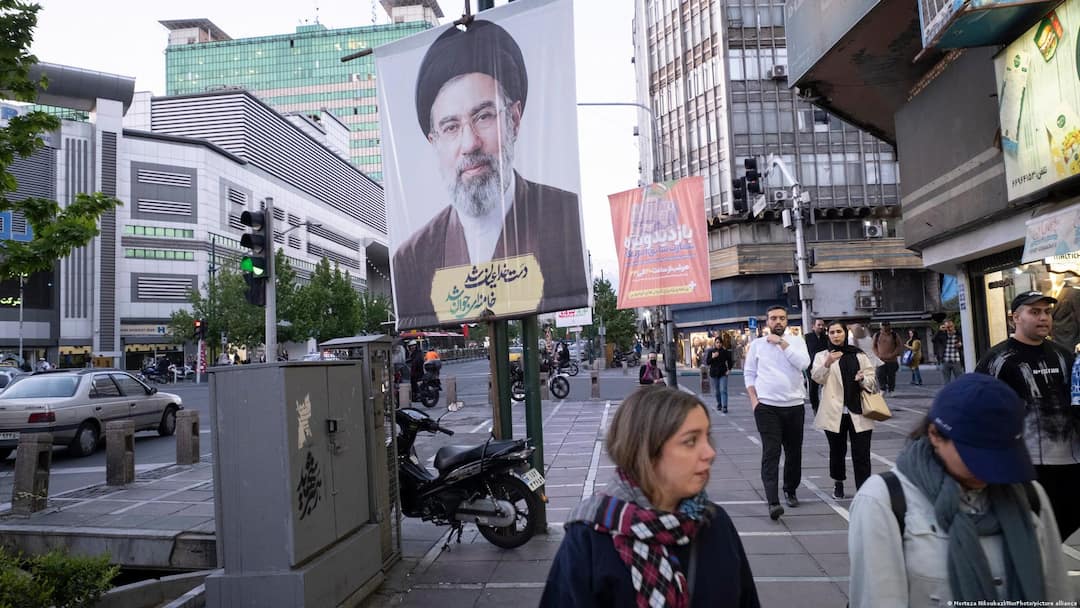
Iran’s political establishment appears to be grappling with fresh internal tensions, with reports suggesting that President Masoud Pezeshkian and Parliament Speaker Mohammad Bagher Ghalibaf are seeking the removal of Foreign Minister Abbas Araghchi.
According to UK-based outlet Iran International, the move stems from concerns that Araghchi has been acting independently of the government line and in close coordination with the Islamic Revolutionary Guard Corps (IRGC) leadership.
Claims of ‘Parallel Decision-Making’ in Nuclear Talks
Citing sources familiar with the matter, the report said Pezeshkian and Ghalibaf believe Araghchi has, in recent weeks, operated less as a cabinet minister implementing official policy and more as an aide to IRGC commander Ahmad Vahidi.
The sources alleged that over the past two weeks, Araghchi has acted without informing the president, coordinating directly with Vahidi and following his directives, particularly in matters related to nuclear negotiations.
ALSO READ |
President Reportedly Signals Possible Dismissal
The developments have reportedly caused significant unease within the executive leadership. The report claims Pezeshkian has conveyed to close aides that he may move to dismiss Araghchi if the current situation persists.
While there has been no official confirmation from Iranian authorities, the reported friction points to a widening gap between the elected government and the powerful Revolutionary Guards.
Earlier Reports Highlight Growing Power Struggle
This is not the first indication of divisions within Iran’s leadership. On March 28, reports had highlighted serious disagreements between Pezeshkian and Vahidi, described as one of the most influential figures within the IRGC.
Sources cited at the time said the rift was linked to disagreements over the handling of the ongoing war and its economic fallout, including its impact on livelihoods.
Subsequent reports suggested that Pezeshkian had expressed frustration over what was described as a “complete political deadlock”, with claims that his authority to appoint replacements for officials killed during the conflict had been curtailed.
According to those reports, Vahidi had argued that, given the wartime situation, all key administrative positions should remain under the direct control of the Revolutionary Guards.
ALSO READ |
Global Alert: US moves to deploy hypersonic Dark Eagle amid Iran tensions and Gulf escalation today
Doonited Affiliated: Syndicate News Hunt
This report has been published as part of an auto-generated syndicated wire feed. Except for the headline, the content has not been modified or edited by Doonited