
Show Quick Read
Key points generated by AI, verified by newsroom

Iran-Israel War: The Israel-Iran conflict escalated dramatically following the killing of Ayatollah Ali Khamenei, with subsequent reports confirming the deaths of other senior figures, including Ali Larijani and high-ranking officials. As the war deepens, questions are mounting over the command structure in Tehran and whether authority remains centralised or has shifted elsewhere, triggering fresh uncertainty over who is steering the country as the conflict intensifies.
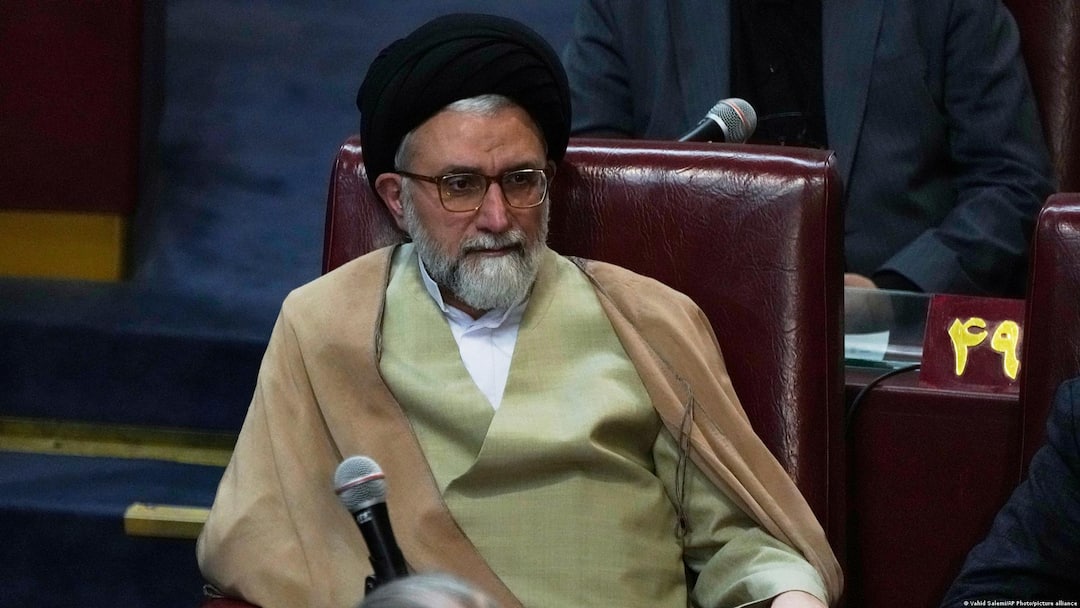
Mojtaba Khamenei’s Rise & Lingering Questions
In the wake of Khamenei’s death, his son Mojtaba Khamenei, 56, has reportedly stepped into the role of Supreme Leader. Though long viewed as a potential successor, Mojtaba had not previously held elected office.
Now, he is believed to wield formal control over Iran’s armed forces and key state decisions, including those tied to the nuclear programme. His close association with the Islamic Revolutionary Guard Corps (IRGC) is also seen as a significant factor in his elevation.
However, uncertainty surrounds his grip on power. His absence from public appearances since the strike, coupled with reports suggesting he may have been injured, has raised doubts about how effectively he is leading during this critical period.
Netanyahu Questions Iran’s Leadership Clarity
The ambiguity surrounding Tehran’s leadership has not gone unnoticed internationally. Benjamin Netanyahu, Israel’s Prime Minister, publicly cast doubt on who is currently in charge.
“I’m not sure who’s running Iran right now,” Netanyahu said during a news conference Thursday night, AP reported.
“Mojtaba, the replacement ayatollah, has not shown his face. Have you seen him? We haven’t, and we can’t vouch for what exactly is happening there.”
His remarks reflect broader global concerns over the lack of visible leadership at the top of Iran’s political structure.
IRGC’s Expanding Role In Power Structure
Amid the uncertainty, analysts suggest that real authority may now be shifting towards the IRGC, a powerful institution with deep roots in Iran’s political and military systems.
Ali Vaez of the International Crisis Group highlighted this shift, stating, “The Revolutionary Guard is the state now,” as per a report by AP.
Established after the 1979 Revolution, the IRGC has long functioned alongside the regular military, wielding significant influence over national security, economic affairs, and governance.
Signs Of Decentralised Military Command
Further complicating the picture are indications that Iran’s military operations may no longer be centrally coordinated. Abbas Araghchi previously suggested that certain units were operating with a degree of autonomy. Speaking on Al Jazeera, he said:
“Our military units are now in fact independent and somehow isolated and they are acting based on instructions, you know, general instructions, given to them in advance,”
As the conflict continues, the evolving power dynamics in Tehran remain a key factor in determining how events unfold in the region.
Breaking News: Alvida Jumma prayers in India marked by black armbands, grief over Iran-Israel tensions
Doonited Affiliated: Syndicate News Hunt
This report has been published as part of an auto-generated syndicated wire feed. Except for the headline, the content has not been modified or edited by Doonited