
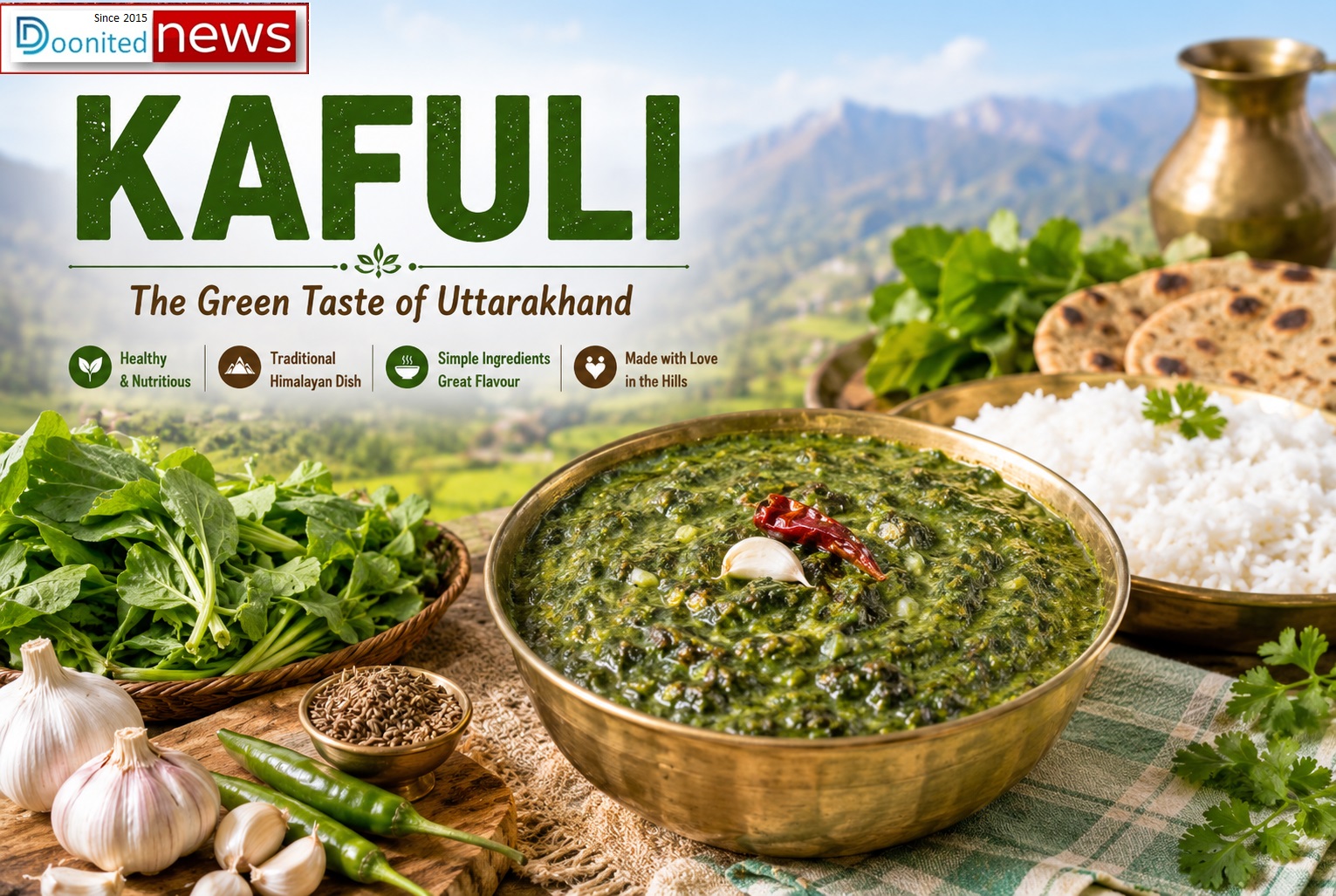
Kafuli: Traditional Uttarakhand Green Dish, Recipe, History & Benefits
By Doonited News | Food Uttarakhand
Kafuli is not just a dish; it is a taste of the mountains. In the traditional homes of Garhwal and Kumaon, this humble green preparation has nourished generations with warmth, strength and simplicity. Made from fresh leafy greens such as spinach and fenugreek, Kafuli reflects the wisdom of Himalayan communities that learned to cook according to the seasons and the resources available around them.
In today’s world of fast food and processed meals, Kafuli reminds us that healthy food can also be deeply traditional. Its earthy flavour, thick texture and nourishing qualities make it one of Uttarakhand’s most beloved dishes.
A Dish Born in the Himalayas
The story of Kafuli begins in the mountain villages of Uttarakhand. Terraced fields, cool weather and small kitchen gardens encouraged the cultivation of hardy greens such as spinach, fenugreek and mustard leaves. These vegetables were affordable, easy to grow and rich in nutrients.

Mountain life demanded physical labour—walking steep paths, working in fields and carrying water and firewood. Families needed meals that were filling, inexpensive and nutritious, and Kafuli became a natural answer.
Cooked slowly over wood fires and thickened with rice flour, the dish evolved as an everyday staple rather than a festive luxury.
Why Kafuli Represents Uttarakhand
Kafuli beautifully expresses the food philosophy of Uttarakhand:
Seasonal eating – using greens available in the local climate.
Local self-reliance – ingredients often came directly from home gardens.
Minimal processing – the natural flavour of the greens remains intact.
Sustainability – simple ingredients with very little waste.
Community cooking – prepared in generous quantities and shared by the family.
It is food that connects people with their land.
Traditional Ingredients

A classic Garhwali Kafuli usually contains:
Fresh spinach leaves (palak)
Fresh fenugreek leaves (methi)
Green chilies
Garlic
Ginger
Cumin seeds
Mustard oil or ghee
Rice flour or wheat flour for thickening
Salt
Some households add a little curd or buttermilk for a mild tangy flavour, while others keep the preparation completely dairy-free.
Authentic Kafuli Recipe (Traditional Garhwali Style)
Serves: 4 people
Ingredients
2 cups spinach leaves, chopped
1 cup fenugreek leaves, chopped
2 green chilies
5–6 garlic cloves
1 inch ginger
1 tablespoon mustard oil or ghee
1 teaspoon cumin seeds
1 tablespoon rice flour
½ cup water
Salt to taste
Step-by-Step Method
Wash the greens thoroughly several times to remove soil and grit.
Cook the greens with green chilies and a little water until soft.
Grind into a coarse paste.
Heat mustard oil, add cumin, garlic and ginger.
Add the green paste and cook gently.
Mix rice flour with water and stir it in.
Simmer until the dish becomes thick and creamy.
Serve hot with rice or mandua roti.

The result is a thick green dish with a gentle bitterness from fenugreek, softness from spinach and warmth from garlic.
Nutritional Benefits of Kafuli

Kafuli is often considered one of the healthiest foods of Uttarakhand.
Rich in Iron
Leafy greens help support healthy blood formation.
High in Fibre
Aids digestion and promotes gut health.
Excellent Source of Vitamins
Provides vitamins A, C and K, important for immunity, skin and bones.
Low in Calories
Filling yet light, making it suitable for balanced diets.
Antioxidant-Rich
The dark green leaves contain protective plant compounds that help combat oxidative stress.
Kafuli and Modern Healthy Eating
Nutrition experts today encourage plant-based, minimally processed and seasonal foods. Remarkably, Kafuli has followed these principles for centuries.
It contains fresh greens, very little oil, no artificial ingredients, high fibre and natural micronutrients. This makes Kafuli a perfect example of how traditional Himalayan food can meet modern wellness goals.
Best Ways to Eat Kafuli
In Uttarakhand homes, Kafuli is most commonly enjoyed with:
Steamed rice
Mandua (finger millet) roti
Jhangora (barnyard millet)
A spoon of ghee
Bhang ki chutney

Together, these foods create a balanced mountain meal rich in minerals, fibre and plant nutrients.
A Cultural Symbol of Uttarakhand
Kafuli is often prepared during winter gatherings, family meals and regional food festivals. Serving Kafuli to guests is considered a gesture of warmth and authenticity because it represents the food that local people actually eat every day.
Unlike elaborate restaurant dishes, Kafuli carries the memory of home kitchens, grandmothers’ recipes and mountain hospitality.
The Green Taste of the Himalayas
![Thread by @historywali: "Because I shoot food-shows all over the country, I come across some incredible traditional kitchens and bartan. This is in a village in the […]" #Shekhawati #Rajasthan #Arakku #Coffee](https://images.openai.com/static-rsc-4/gI140sQXzb1giagiEwLNCZUJ-Z1_voPkND1dg5l58fqtnWwEbE9DV8esCqZdhHYz9cEYKcpvSZPmdsJEO906S3ShEdQtDeMj_vL6r6DF9KhZvD-CuZt38etIu4n22FqYjhb2DwoQq24r_yBRG0aTovocNi-79G_3EH1HGgFPoFcRTvh_SAagrpprRHN4thft?purpose=fullsize "Kafuli: The Green Soul of Uttarakhand’s Himalayan Kitchen")
When you eat Kafuli, you are tasting more than spinach and fenugreek. You are tasting the terraced fields of Garhwal, the cool air of Kumaon, the smoke of traditional kitchens and the practical wisdom of Himalayan life.
In a rapidly changing world, Kafuli continues to teach a simple lesson:
Good food does not need to be complicated.
A handful of fresh greens, a little garlic, a touch of mustard oil and patient cooking are enough to create a dish that has sustained Uttarakhand for generations.
That is why Kafuli remains one of the true culinary treasures of the Himalayas—the green soul of Uttarakhand’s kitchen.