

Show Quick Read
Key points generated by AI, verified by newsroom

- US launched airstrikes, blaming Iran for Apache helicopter crash.
- Iran retaliated with attacks across Bahrain, Kuwait, and Jordan.
- Escalation threatens fragile ceasefire and broader regional stability.
The conflict in the Middle East widened sharply on Wednesday as Iran launched fresh attacks across the region after the United States carried out airstrikes against Iranian targets, blaming Tehran for the crash of an American Apache attack helicopter near the Strait of Hormuz.
Kuwait’s military said its air defence systems were engaging what it described as “hostile aerial targets”, while Bahrain and Kuwait activated emergency alerts and responded with defensive measures. Jordan also reported intercepting incoming Iranian missiles aimed at an area housing a military base used by American forces.
The latest exchange of attacks marks a significant escalation in a conflict that has already rattled global markets, driven up energy prices and raised concerns over the stability of one of the world’s most strategically important regions.
Iran Expands Retaliatory Strikes Across Region
Iran launched attacks targeting sites in Bahrain and Kuwait, prompting both countries to activate air defence systems and issue alerts to residents.
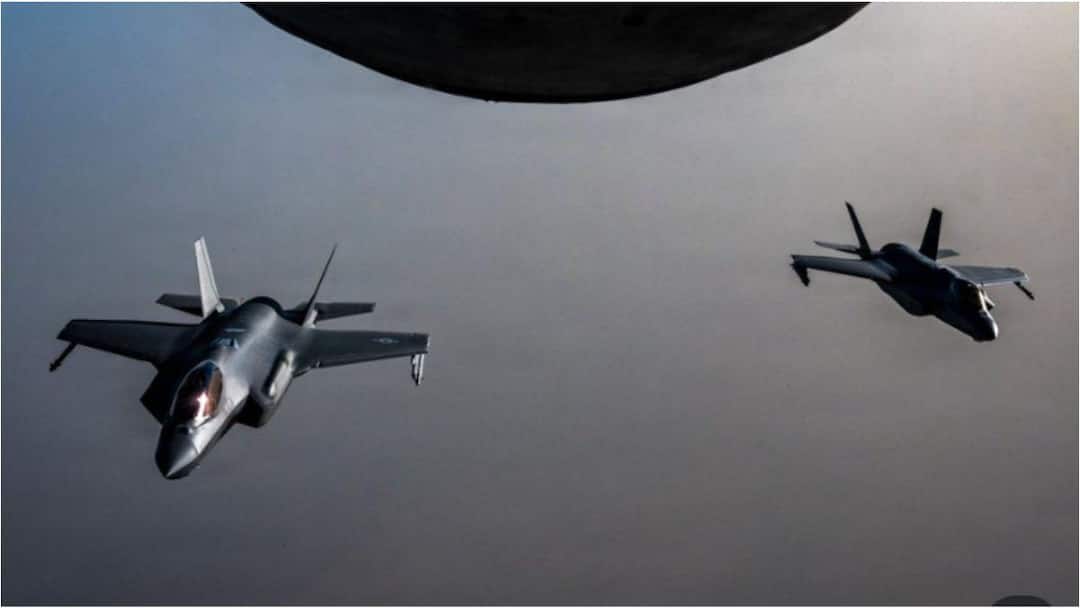
In Jordan, military officials said air defence units intercepted five missiles launched by Iran. According to Iranian authorities, the missiles were aimed at the Muwaffaq Salti Air Base, a facility known to host US military assets, including F-35 fighter aircraft.
Jordan’s state-run Petra news agency cited the military as saying no casualties were reported. Officials added that explosives experts were examining debris recovered from the intercepted missiles.
ALSO READ | US Launches Fresh Strike On Iran After Tehran Downs Apache Helicopter In Strait Of Hormuz
US Airstrikes Follow Helicopter Incident
The latest escalation came after the United States launched airstrikes against Iran early Wednesday.
Washington blamed Tehran for the crash of a US Army AH-64 Apache attack helicopter near the Strait of Hormuz. According to a US official, the aircraft collided with an Iranian drone before going down.
The official, who spoke on condition of anonymity because of the ongoing investigation, said it remains unclear whether the collision was deliberate. US authorities have said the circumstances surrounding the crash are still under investigation.
Fragile Ceasefire Under Renewed Pressure
The Apache incident and the subsequent US military response have placed fresh strain on an already fragile ceasefire.
The confrontation comes just a day after Iran and Israel exchanged fire for the first time since a truce was agreed upon in April. Iranian state television reported that Israeli strikes on Tuesday killed at least two members of the country’s air defence units.
Efforts to transform the ceasefire into a permanent agreement have struggled to gain momentum, with repeated military incidents undermining diplomatic progress.
Regional Conflict Continues to Grow
The broader conflict began on February 28 when the United States and Israel launched attacks on Iran, triggering a cycle of retaliation that has spread across multiple countries in the region.
The war has had far-reaching consequences, including disruptions to global energy markets and rising costs for essential commodities. Concerns have also intensified over the potential for a wider regional confrontation involving multiple state and non-state actors.
At the same time, Israel has continued to expand military operations in Lebanon against Hezbollah, the Iranian-backed militant group, further complicating efforts to achieve a lasting settlement.
ALSO READ | Pakistan Airstrikes In Afghanistan Kill 19; Taliban Says 11 Children Died In Their Sleep
Uncertainty Surrounds Peace Talks
Diplomatic efforts aimed at ending the conflict continue, but recent developments have cast further doubt on the prospects of a breakthrough.
The latest missile attacks, airstrikes and military confrontations underscore the challenges facing negotiators attempting to secure a durable peace agreement.
With hostilities spreading beyond the immediate battlefield and drawing in additional countries, regional leaders and international powers are likely to face increasing pressure to prevent a broader escalation.
Pakistan–Afghanistan Tensions: Pakistan Conducts Airstrikes in Afghanistan as Border Tensions Escalate
Doonited Affiliated: Syndicate News Hunt
This report has been published as part of an auto-generated syndicated wire feed. Except for the headline, the content has not been modified or edited by Doonited