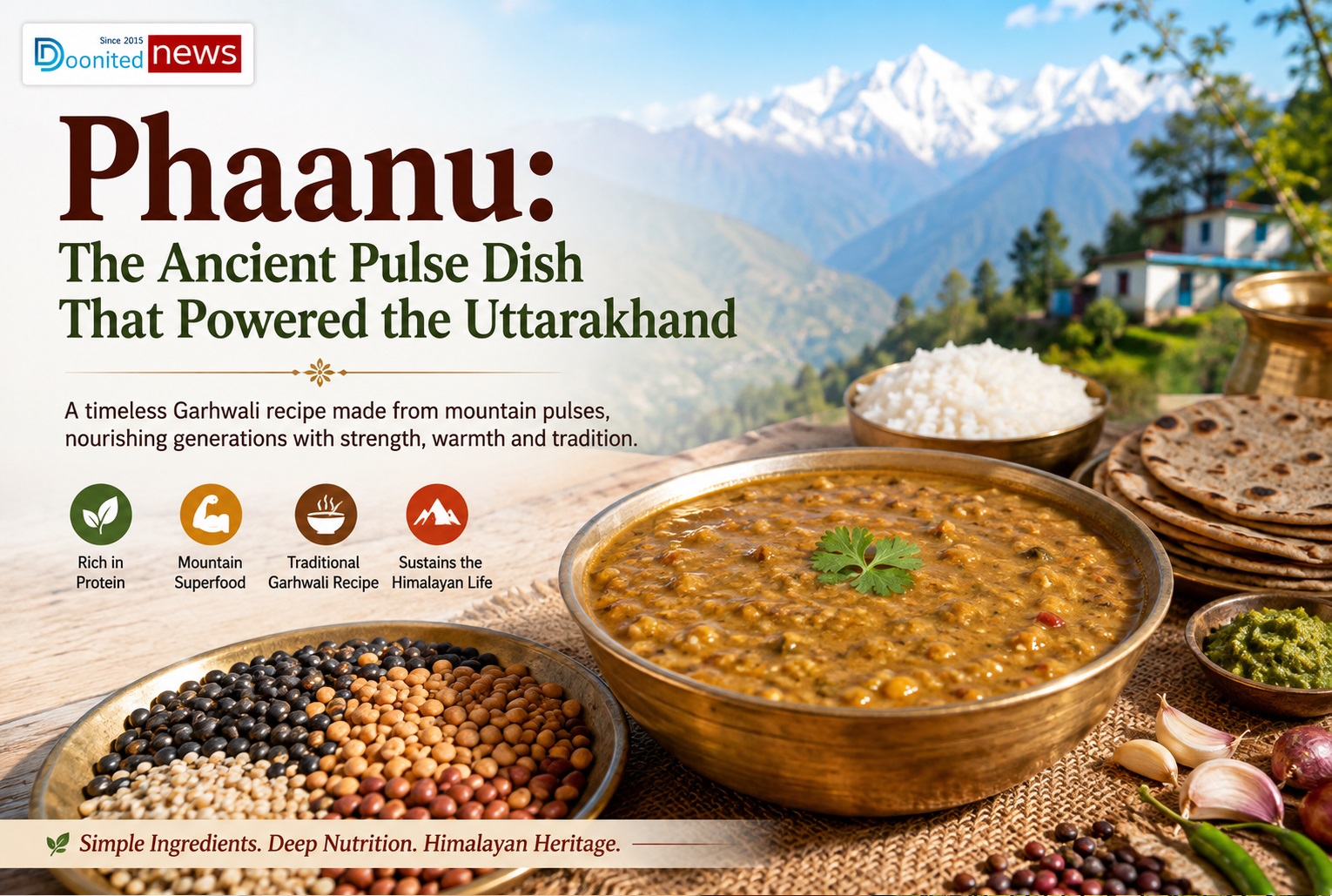
Phaanu: The Ancient Pulse Dish That Powered the Garhwal Himalayas
By Doonited News | Food Uttarakhand
Long before nutritionists began speaking about plant protein and sustainable diets, the people of the Garhwal Himalayas had already perfected a food that was nutritious, economical and perfectly suited to mountain life. That food is Phaanu, one of Uttarakhand’s oldest traditional pulse preparations.
Thick, earthy and deeply comforting, Phaanu is not a restaurant invention. It is the food of village kitchens, winter evenings, farming families and high-altitude households where every meal had to provide strength for a demanding life.
Today, as modern India rediscovers traditional foods, Phaanu is emerging once again as a symbol of the wisdom of Himalayan cooking.
A Dish Born From Mountain Necessity
The history of Phaanu is closely linked with the geography of Garhwal. In the steep Himalayan terrain, wheat and rice were not always abundant, but pulses grew reliably on terraced fields. Families cultivated local lentils such as gahat (horse gram), bhatt (black soybean), arhar, urad and other hardy mountain pulses.

These pulses stored well through harsh winters and required relatively little water. Over generations, mountain communities developed methods of soaking, grinding and slow-cooking them to create a dish that was easy to digest and highly nourishing.
Phaanu was not considered a special occasion meal; it was everyday strength food.
Why Pulses Matter in Mountain Food
Life in the Himalayas traditionally involved long walks, farming on steep slopes, carrying water, gathering firewood and working in cold weather. Such a lifestyle demanded food that could provide sustained energy.
Phaanu fulfilled that role beautifully.
|
Nutrient |
Why it mattered in the mountains |
|---|---|
|
Protein |
Supported muscle strength for physical labour |
|
Iron |
Helped maintain energy levels |
|
Fibre |
Improved digestion and satiety |
|
Complex carbohydrates |
Provided slow, steady energy |
|
Minerals |
Important for bones and overall health |
In many Garhwali homes, elders still say that a bowl of Phaanu keeps the body warm and strong during winter.
The Traditional Recipe
The classic Garhwali version uses a combination of mountain pulses, especially horse gram.

Ingredients
-
1 cup gahat (horse gram)
-
½ cup mixed lentils (urad or arhar)
-
1 small onion, finely chopped
-
5–6 garlic cloves
-
1 inch ginger
-
1 tsp cumin seeds
-
¼ tsp turmeric
-
1 tbsp mustard oil or ghee
-
Salt to taste
-
Water as required
Traditional Method
-
Wash the pulses thoroughly and soak them overnight.
-
Grind the soaked pulses into a coarse paste.
-
Heat mustard oil and add cumin.
-
Add onion, garlic and ginger and sauté until aromatic.
-
Add turmeric and the pulse paste.
-
Cook slowly while stirring continuously.
-
Add water gradually to achieve a thick soup-like consistency.
-
Simmer on low heat until the pulses are fully cooked and creamy.
-
Serve hot with steamed rice or mandua roti.
The slow cooking is essential; it allows the flavours to deepen and the pulses to become velvety.
The Aroma of a Garhwali Kitchen
As Phaanu cooks, the kitchen fills with the nutty fragrance of roasted pulses, garlic and mustard oil. In mountain homes, the dish was traditionally prepared over wood fires, which added a subtle smoky character.

Many families still consider Phaanu incomplete without a spoon of homemade ghee added just before serving.
A Forgotten Superfood
Modern nutrition science has begun to appreciate foods that traditional communities valued instinctively. Horse gram, one of Phaanu’s key ingredients, is now recognized for its high protein and fibre content.
Health Benefits of Phaanu
-
Rich plant protein for vegetarians
-
High dietary fibre for digestive health
-
Low glycaemic impact compared with many refined foods
-
Helps maintain satiety for longer periods
-
Provides essential minerals such as iron and calcium
-
Supports a nutrient-dense traditional diet

What Himalayan villagers once ate out of necessity is now being celebrated as a wholesome, sustainable food.
The Difference Between Phaanu and Dal
Visitors often mistake Phaanu for an ordinary dal, but Garhwali cooks insist the two are different.
|
Phaanu |
Ordinary Dal |
|---|---|
|
Made from soaked and ground pulses |
Made from whole or split lentils |
|
Thick and creamy texture |
Usually thinner |
|
Slow-cooked for a long time |
Often cooked more quickly |
|
Deep earthy flavour |
Milder flavour |
|
Traditional Garhwali specialty |
Common across India |
Phaanu is therefore better understood as a specialized mountain pulse stew rather than a regular dal.
The Best Traditional Pairings
In Uttarakhand villages, Phaanu is commonly served with foods that complement its richness.

Classic Garhwali Meal
-
Steamed rice
-
Mandua (finger millet) roti
-
A spoon of ghee
-
Bhang ki chutney
-
Seasonal mountain vegetables
This combination creates a balanced meal rich in protein, fibre and minerals.
Phaanu in Village Life
Elders in Garhwal recall that Phaanu was often cooked in large pots during community gatherings, winter evenings and agricultural work periods. After long days in the fields, families would gather around the hearth and share bowls of hot Phaanu.
The dish therefore carries emotional value as well as nutritional value; it represents warmth, family and the rhythm of mountain life.
Can Phaanu Survive Modern Times?
As packaged foods and urban eating habits spread into the hills, traditional dishes like Phaanu face competition from quicker meals. Yet there is encouraging change. Homestays, local food festivals and young chefs in Uttarakhand are increasingly reintroducing Phaanu to visitors.
Travelers seeking authentic Himalayan cuisine often find that Phaanu leaves a stronger memory than many elaborate restaurant dishes because it tastes unmistakably local.
A Bowl That Tells the Story of the Mountains
Phaanu demonstrates one of the central truths of Uttarakhand’s culinary heritage: mountain food evolved through intelligence, not abundance. Every ingredient had a purpose, every technique conserved nutrition, and every meal was connected to climate, labour and landscape.
When you eat Phaanu, you are tasting terraced fields, winter fires, village kitchens and generations of Himalayan knowledge.
In a single bowl of Phaanu, the Garhwal Himalayas tell their story of resilience, simplicity and nourishment.
That is why this humble pulse dish remains one of the most important foods of Uttarakhand—not merely as a recipe, but as a living piece of mountain heritage.