
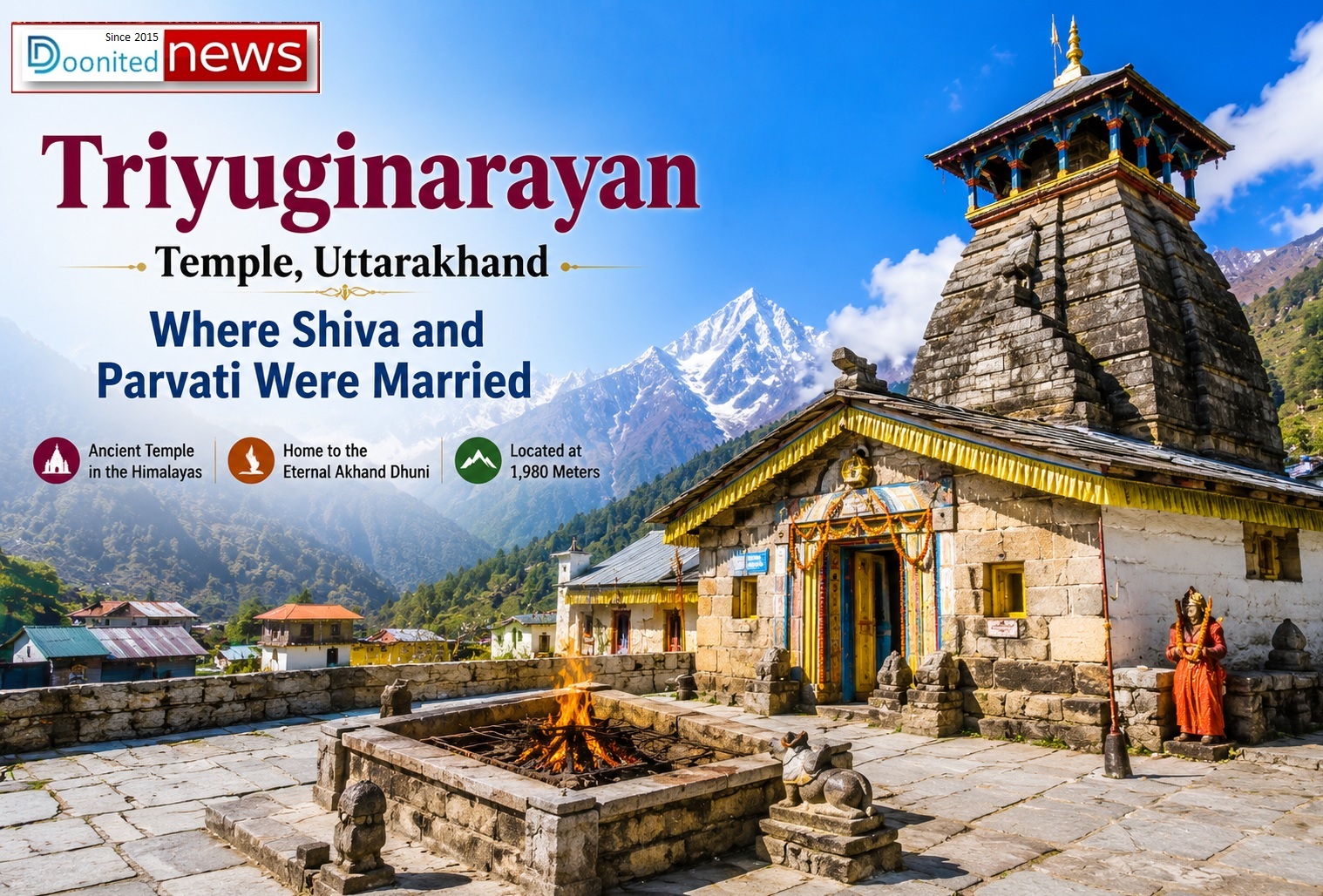
Triyuginarayan: The Himalayan Temple Where Shiva and Parvati Were Married
By Doonited News | Devotional Uttarakhand
High in the mountains of Rudraprayag district, where clouds drift across cedar-covered slopes and temple bells echo through the valley, stands a shrine that local tradition calls the wedding venue of the gods.
This is Triyuginarayan Temple, an ancient Hindu temple located at an altitude of about 1,980 metres in Uttarakhand. Pilgrims do not come here only for darshan; they come to witness a sacred fire that, according to tradition, has burned continuously since the divine marriage of Lord Shiva and Goddess Parvati.
The fire is known as the Akhand Dhuni, and it is the heart of one of the Himalayas’ most captivating spiritual stories.
A Temple Above the Clouds
The journey to Triyuginarayan itself feels ceremonial. The road climbs through mountain villages, terraced fields and forests before revealing a stone temple set against the backdrop of the Garhwal Himalayas.

Unlike crowded pilgrimage towns, Triyuginarayan retains a quieter, almost timeless atmosphere. The air is cool, the sky often startlingly clear, and the temple appears less like a monument and more like a living witness to an ancient story.
The Celestial Wedding of Shiva and Parvati
According to Hindu tradition, this is the place where Lord Shiva married Goddess Parvati after her long penance in the Himalayas. The ceremony was attended by the gods themselves, and Lord Vishnu is believed to have performed the role of Parvati’s brother during the wedding rituals.

For devotees, Triyuginarayan is therefore not merely a temple—it is a sacred wedding hall preserved in the mountains. Many couples visit the shrine seeking blessings for a harmonious marriage, and some choose to solemnize their own weddings here in memory of the divine union.
The Fire That Never Sleeps
At the centre of the temple courtyard burns the famous Akhand Dhuni. Tradition holds that this sacred fire has remained alive since the wedding of Shiva and Parvati and has continued through three yugas, which is why the place is called Triyugi-Narayan—“the Lord of the Three Ages.”

Pilgrims offer small pieces of wood into the fire and carry home a little of its ash, believing it to be auspicious for family life and marital harmony.
Whether one approaches the tradition through faith or symbolism, the continuously maintained fire creates a powerful emotional experience. It is difficult to stand beside the flames and not feel connected to centuries of devotion.
Architecture of Quiet Grandeur
The temple is built in the classic stone style of the Garhwal Himalayas, with a shikhara rising above a compact sanctum. Its architectural simplicity is one of its greatest strengths.

There is no excessive ornamentation. The weathered stones, mountain setting and sacred fire together create an atmosphere that feels ancient and intimate rather than grandiose.
The Sacred Kunds Around the Temple
Near the temple are several sacred water tanks traditionally associated with the divine wedding. Pilgrims often visit these kunds before entering the temple complex.

Local belief holds that these waters carry spiritual purity, and many visitors sprinkle the water upon themselves as part of their pilgrimage ritual.
Why Couples Are Drawn Here
In recent years, Triyuginarayan has become increasingly popular among couples seeking a meaningful wedding destination. Unlike luxury resort weddings, a ceremony here is rooted in mythology, spirituality and the Himalayan landscape.

Priests explain that marrying in the presence of the Akhand Dhuni symbolizes a bond blessed by Shiva and Parvati themselves. The setting—snow peaks in the distance, temple bells, incense and mountain air—adds a rare sense of sacredness.
A Living Pilgrimage Route
Triyuginarayan is closely linked with the broader Kedarnath pilgrimage region. Many pilgrims visiting Kedarnath include this temple in their itinerary, creating a spiritual journey that connects Shiva’s sacred mountain abode with the place of his divine marriage.

The route reminds travellers that in Uttarakhand, mythology is often mapped directly onto the landscape.
Sunrise Over Triyuginarayan
Those who stay overnight in the village often speak of the extraordinary sunrise. As the first light touches the Himalayan ridges, the temple stones glow softly and smoke rises from the sacred fire into the cold mountain air.

More Than Myth
Historians may study the temple’s age, architecture and regional traditions, while devotees focus on the divine wedding narrative. Yet both perspectives agree on one thing: Triyuginarayan has been an important sacred centre of the Garhwal Himalayas for centuries.
Its enduring significance lies not only in ancient belief but also in the way it continues to shape living religious practice today.
The Temple That Keeps a Wedding Alive
In most places, a wedding lasts a few hours. At Triyuginarayan, tradition says the wedding of Shiva and Parvati has never truly ended. The fire still burns, prayers are still offered, and couples still arrive seeking blessings beneath the same Himalayan sky.
Standing beside the Akhand Dhuni, watching sparks rise into the mountain air, one understands why this small temple has become one of Uttarakhand’s most cherished spiritual destinations.
Triyuginarayan is not simply a temple; it is a living memory of a divine marriage that the Himalayas continue to celebrate.